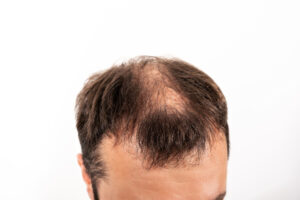
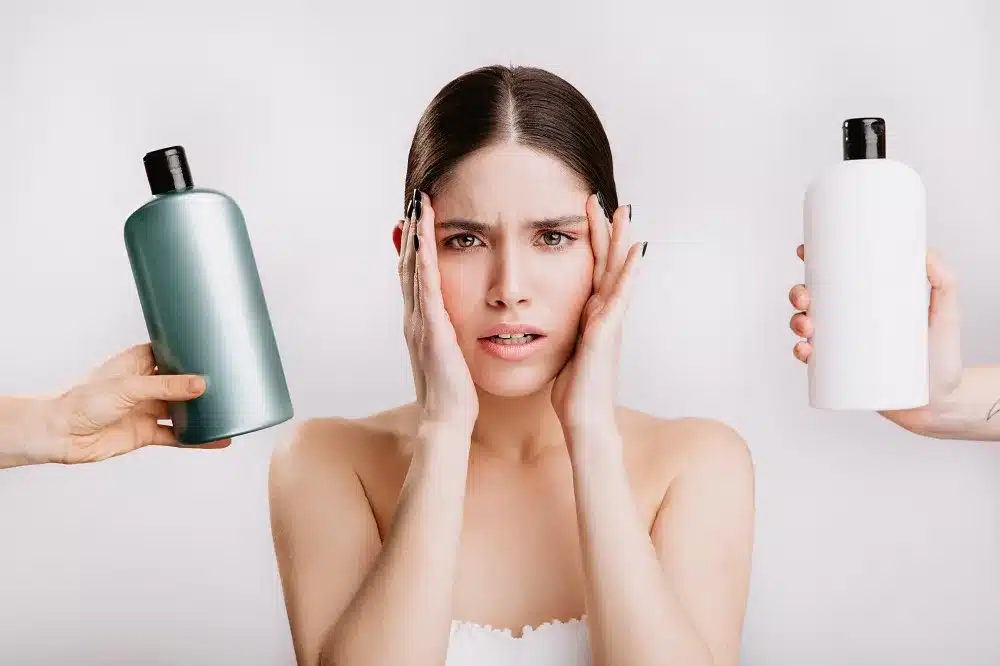
Every day at Mays Dermatology, we meet people who have spent hundreds of dollars on “miracle” shampoos that claim to give them a full head of hair in thirty days. To be clear, shampoo is a “rinse-off” product. It doesn’t remain on your scalp for very long, therefore it can’t restore hair as well as leave-in medicines.
But appropriate shampoo is an important part of the treatment. It gets grease removed from the scalp and allows your medicated treatments or hair care products to work better.
Here are the elements that have been shown to work and the marketing hype you should avoid.
1. The Heavy Hitters: Important Active Ingredients
To get a good idea of how healthy your hair is, you need elements that either stop hormones that make hair thin or make the scalp a lot better.
- Ketoconazole: This was once used to treat fungal infections, but clinical research shows that a 2% concentration can be just as good as 2% Minoxidil at making hair thicker. It works by lowering Malassezia (a kind of fungus) and maybe stopping DHT (the hormone that causes pattern baldness) at the scalp level.
- Caffeine: Not just for waking you up in the morning. Caffeine applied to the skin has been demonstrated to stop testosterone from stopping hair follicle development. It speeds up the “anagen” (growth) phase and makes microcirculation to the bulb better.
- Saw Palmetto: A natural way to prevent DHT. It helps lower the enzyme (5-alpha reductase) that turns testosterone into DHT, which kills hair, but it doesn’t work as well as prescription Finasteride.
- Salicylic Acid: Important for people with greasy scalps. It chemically removes dead skin and oil that can block hair follicles and create “scalp acne” or folliculitis.
2. The "Support Crew": Protecting and Making Stronger
These substances don’t make new hair grow, but they do stop the hair you already have from breaking off, which is typically thought to be irreversible loss.
|
Ingredient
|
Function
|
Why We Recommend It
|
|---|---|---|
|
Biotin (B7)
|
Strengthens keratin
|
Reduces breakage and improves hair shaft diameter.
|
|
Niacin (B3)
|
Boosts circulation
|
Enhances the delivery of oxygen to the hair follicle.
|
|
Rosemary Oil
|
Anti-inflammatory
|
Studies show it performs similarly to mild Minoxidil over 6 months.
|
|
Hydrolysed Proteins
|
Structural repair
|
Fills in "gaps" in the hair cuticle to prevent splitting.
|
3. Red Flags: Ingredients That Will Slow Your Progress
If your “hair loss” shampoo has these ingredients, it might be doing more damage than good:
- Sulphates (SLS/SLES): These strong soaps take away the natural oils from the scalp, which can cause irritation and make hair weak.
- Parabens: These chemicals can act like estrogen and throw off the hormonal balance that is needed for healthy hair cycles.
- Sodium Chloride: This is often used as a thickening, but it can dry up the hair shaft, which makes it more likely to break.
4. Why Clinical Guidance Is Better Than the "Beauty Aisle"
Picking a shampoo based on how nice the bottle looks or what a celebrity says about it is not a good way to save money or stay healthy. Dr. Rana Mays is a Double Board-Certified Dermatologist who knows that hair loss is a medical disease, not just a cosmetic one.
Dr. Mays is double board-certified Dermatologist with special interest in hair loss disorders. She explains to patients the most important part of hair loss treatment is a consult with a Dermatologist! Based on her exam, biopsy (if needed) or lab work, Dr. Mays tailors the best clinically effective evidence-based treatments for hair loss.
5. Dr. Mays instructions for best absorption of hair treatments
- Double Wash: Start with a light cleaner once daily, increase to twice daily if oily or greasy hair
- The Treatment Phase: Apply recommended active treatment directly on the scalp skin for best absorption
- The Wait: This is really important. Allow 2-3 minutes for best absorption of most active ingredients
- Cool Rinse: Rinse your hair with cool water to calm your scalp and seal the hair cuticle.
In short, put your money on science, not scents.
Shampoo alone is rarely the “cure” for hair loss, but using the incorrect one will definitely make it worse. Avoid strong detergents and look for DHT blockers and scalp exfoliants.
Stop wasting time (and hair) on products that don’t work. [Make an appointment with Dr. Rana Mays at Mays Dermatology now for a clinical hair examination to obtain a treatment plan that is based on your own data.]